FIH dose selection beyond MABEL: Optimizing phase 1 clinical trial starting dose whilst protecting patient safety
Regulatory Toxicology and Pharmacology, 2026


The HESI Immuno‑Safety Technical Committee (ITC) works to identify and address scientific questions related to immune safety and to strengthen the translation of immune safety findings into human health risk assessment.
It’s Key Objectives are to:
Mission: To lead cross-sector discussions among academic, regulatory, and industry organizations on key risk-assessment issues affecting drug development and human health.
Working Group Leadership: Birgit Fogal (Sanofi) and Ashwini Phadnis (Boehringer Ingelheim)
HESI Staff: Shermaine Mitchell-Ryan
This work stream is examining how new approach methodologies (NAMs) can be implemented in immune safety assessment. The team is conducting a comparative analysis of global regulatory guidance and developing case studies and educational tools to identify appropriate contexts of use, remaining scientific gaps, and the evidence needed to build regulatory confidence in NAM-based decisions.
The team also played an essential role in planning and delivering the 2026 ITC workshop, “From Decisions to Evidence: A Context-of-Use Framework for NAMs in Immune Safety Assessment.” The workshop brought together experts from regulatory agencies, industry, and academia to evaluate the readiness and fitness of NAMs for specific immune safety applications and identify priorities for advancing their regulatory use.
Planned Outputs: A regulatory landscape analysis, case studies, educational resources, a workshop report, and recommendations for advancing the fit-for-purpose use of NAMs in immune safety assessment.
Leadership: Birgit Fogal (Sanofi) and Joseph Woska (ImmunityBio)
HESI Staff: Shermaine Mitchell-Ryan
This work stream is summarizing regulatory guidance and developing a weight-of-evidence approach for evaluating the carcinogenic potential of immunomodulatory therapies. The team is compiling case studies and relevant assays to clarify when additional carcinogenicity testing may or may not be warranted.
Planned Outputs: A manuscript and webinar series describing a regulator-aligned weight-of-evidence framework.
Leadership: Birgit Fogal (Sanofi) and Ashwini Phadnis (Boehringer Ingelheim)
HESI Staff: Chrissy Crute
This work stream is developing practical recommendations for the design, conduct, interpretation, and reporting of cytokine release assays used for preclinical hazard identification of protein-based biologics. The work focuses on mechanism-informed and fit-for-purpose use of these assays.
Planned Output: A best-practices manuscript and decision framework outlining when cytokine release assays are warranted and how their results should be interpreted.
Leadership: Marie-Soleil Piché (Charles River Laboratories) and Mark Collinge (Pfizer)
HESI Staff: Shermaine Mitchell-Ryan
This work stream is examining the biological mechanisms underlying the loss of immune tolerance, clinical manifestations across organ systems, patient susceptibility and biomarkers, the predictive value of nonclinical models, emerging therapeutic modalities, and strategies for managing efficacy-toxicity tradeoffs.
Planned Output: A workshop focused on autoimmunity and immune-related adverse events, with additional outputs to be defined through the scoping process.
Leadership: Birgit Fogal (Sanofi) and Joseph Woska (ImmunityBio), Sean Hammond (ApConnix)
HESI Staff: Shermaine Mitchell-Ryan
Mission: To optimize and share methodologies used for immune safety testing across companies and research organizations and support the generation of appropriate preclinical data for protecting public health.
Working Group Leadership: Courtni Newsome (Johnson & Johnson) and Mike Oropallo (Merck)
HESI Staff: Chrissy Crute
This work stream is developing practical recommendations for the use of complex in vitro models in immune safety testing, including immune-competent microphysiological systems. The current focus is on the biological and technical requirements needed to model T cell-dependent antibody responses in vitro.
Planned Output: A perspective manuscript describing the current state, requirements, limitations, and future qualification needs for complex in vitro TDAR models.
Leadership: Nikki Marshall (GSK) and Mark Collinge (Pfizer)
HESI Staff: Chrissy Crute
This HESI-AAPS collaboration is evaluating standardized protein and peptide reference materials for use in in vitro T-cell activation assays. The initial multi-laboratory pilot assessed anti-PCSK9 monoclonal antibody analogs and examined material stability, assay performance, and sources of interlaboratory and donor variability.
Planned Outputs: A manuscript describing the pilot study and a framework for a larger, externally funded ring trial that would expand the reference panel and support assay harmonization.
Leadership: Sandrine Vessillier (MHRA) and Laurent Malherbe (Eli Lilly and Company)
HESI Staff: Shermaine Mitchell-Ryan
This scoping work stream aims to address the gap between predicted peptide-HLA binding and measured T-cell activation. The proposed study will use in silico HLA-binding tools to select peptides for testing under standardized experimental conditions across fully HLA-typed donors.
Planned Output: A harmonized dataset linking predicted peptide-HLA binding with measured T-cell activation, accompanied by a manuscript describing the proof-of-principle study.
Leadership: Morten Nielsen (Technical University of Denmark) and Laurent Malherbe (Eli Lilly and Company)
HESI Staff: Shermaine Mitchell-Ryan
This work stream is reviewing available natural killer cell functional assays that can be used in the preclinical setting to evaluate the effects of investigational drugs on immune function. The work considers established assays, emerging technologies, published case studies, and relevant regulatory perspectives.
Planned Output: The manuscript “Current Approaches to Evaluating Natural Killer Cell Function in Non-Clinical Immune Safety Assessments.”
Leadership: Jonathan Clingan (Genentech)
HESI Staff: Shermaine Mitchell-Ryan
This work stream brings together assay developers and subject-matter experts with experience in emerging immune safety technologies and methodologies. The series examines the scientific basis, readiness, limitations, and potential applications of these approaches.
Planned Output: An ongoing webinar series on emerging NAMs and complex in vitro models for immune safety assessment.
Leadership: Program-specific speakers and organizers
HESI Staff: Chrissy Crute
This scoping work stream is exploring approaches to improve nonclinical cancer-risk assessment for immunomodulatory therapies. The team will evaluate the scientific rationale and feasibility of assessing Epstein-Barr virus and KSHV/HHV-8 reactivation using NAMs alongside existing in vivo approaches.
Planned Output: A proposed experimental strategy or collaborative research project evaluating NAM-based approaches to viral reactivation and cancer-risk assessment.
Leadership: Hervé Lebrec (Independent Consultant)
HESI Staff: Chrissy Crute
Mission: To examine immune safety testing and the interpretation of immune findings across nonclinical and clinical studies.
Working Group Leadership: Jean Sathish (Pfizer) and Ryan Polli (Novartis)
HESI Staff: Shermaine Mitchell-Ryan
This work stream is developing an approach for evaluating the relationship between nonclinical immune safety findings and clinical outcomes. The initial feasibility assessment is using withdrawn or discontinued therapeutics as a test set to determine whether the necessary nonclinical and clinical information can be identified, standardized, and compared.
The work includes a complementary effort to evaluate nonclinical immunotoxicology findings that were not considered clinically relevant.
Planned Output: A feasibility analysis and translational framework for determining which nonclinical immune findings are predictive of clinical outcomes and how those findings should inform development decisions.
Leadership: Wendy Komocsar (Eli Lilly and Company), and Meredith Steeves (Eli Lilly and Company)
HESI Staff: Shermaine Mitchell-Ryan
This work stream is evaluating the current use of nonhuman primate models in immunotoxicology and their ability to predict human immune responses to T-cell-modulating therapies. The team is identifying knowledge gaps in how NHP data are interpreted and applied in human risk assessment and considering complementary or alternative strategies.
Planned Output: A manuscript describing the circumstances in which NHP models provide meaningful translational information and where alternative approaches may be more appropriate.
Leadership: Lauren Gauthier (Takeda) and Ana Goyos (Johnson & Johnson)
HESI Staff: Chrissy Crute
This work stream is evaluating where animal models provide irreplaceable value, where NAMs may complement or replace them, and how an integrated scientific approach can support fit-for-purpose model selection for immune safety assessment.
Planned Output: A manuscript or scientific framework supporting evidence-based selection of animal models and complementary NAMs for immune safety studies.
Leadership: Smita Salian-Mehta (Gilead Sciences) and Tracey Papenfuss (StageBio)
HESI Staff: Shermaine Mitchell-Ryan
This work stream is evaluating factors that contribute to variability in cytokine concentrations in control cynomolgus monkeys. The goal is to distinguish natural biological variability from test article-related immune effects and improve the interpretation of cytokine data in nonclinical studies.
Planned Output: A manuscript describing baseline cytokine variability, contributing factors, and recommendations for interpreting cytokine measurements in cynomolgus monkey studies.
Leadership: Lynn O’Donnell (Pfizer)
HESI Staff: Shermaine Mitchell-Ryan
This work stream convenes experts in translational immunology to discuss animal models used in immunotoxicology and their relevance to human immune biology. The 2026 Society of Toxicology continuing education course serves as the foundation for the series.
Planned Output: A webinar series examining comparative immune biology, model selection, and translation to humans.
Leadership: Smita Salian-Mehta (Gilead Sciences) and Tracey Papenfuss (StageBio)
HESI Staff: Shermaine Mitchell-Ryan
Please retain this as a separate work stream from the Comparative Immune Biology project. One is a webinar and educational series, while the other is developing a scientific framework for model selection.
Mission: To educate and communicate with the scientific community and the public about issues related to immunosafety science and its application to human health risk assessment.
Working Group Leadership: Tracey Papenfuss (StageBio) and Nikki Marshall (GSK)
HESI Staff: Chrissy Crute
This work stream coordinates ITC continuing education courses, symposia, roundtables, presentations, and other activities at relevant toxicology and immunology conferences. It also supports engagement with academic immunologists, increases awareness of ITC science, and helps recruit new cross-sector participants.
Planned Outputs: Continuing education courses, scientific sessions, roundtables, presentations, webinars, and other outreach activities.
Leadership: Varies by conference or activity
HESI Staff: Shermaine Mitchell-Ryan and Chrissy Crute
This on-demand virtual course provides comprehensive education in immunosafety science. It includes 45 lectures organized into six modules covering immune safety tools, therapeutic modalities, immune toxicities, regulatory considerations, and advanced or specialized topics.
Planned Output: An on-demand virtual immunosafety training course hosted on the new learning platform.
Leadership: ITC subject-matter experts
HESI Staff: Shermaine Mitchell-Ryan
This work stream is developing a manuscript that introduces immunosafety as an emerging discipline connecting basic immunology, translational science, and clinical application. The manuscript will advocate for earlier and more proactive consideration of immune safety in immunology education, research design, and therapeutic development.
Planned Output: A manuscript provisionally titled “Translational Immunology and Immunosafety: Immunologists as Architects of Effective and Safe Therapies.”
Leadership:
HESI Staff: Shermaine Mitchell-Ryan
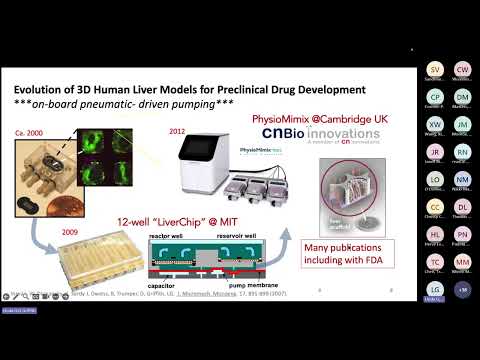 ITC CIVMs in Immunosafety Webinar presents Dr. Linda Griffith
|
 HESI Immuno-Safety Career Symposium
|
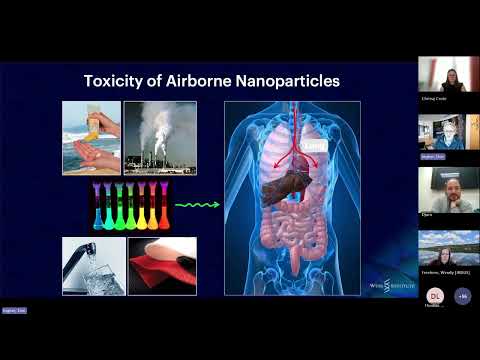 ITC CIVMs in Immunosafety Webinar presents Dr. Donald Ingber
|
No results.
Regulatory Toxicology and Pharmacology, 2026
mAbs, 2025
What began as a spark during a HESI ITC business meeting evolved into a dedicated Immunotoxicology session at the BioSafe Spring 2024 meeting—and today, we’re proud to share the result: a timely new publication in mAbs, authored by experts in HESI’s Immuno-Safety Technical Committee.
Nature Immunology, 2025
The meeting report from the Fall 2024 workshop co-hosted by the National Institute of Allergy and Infectious Diseases (NIAID) and the Health and Environmental Sciences Institute (HESI) on Regulatory T Cell (Treg) Therapies for Autoimmune Diseases and Transplant Rejection has been published in Nature Immunology.
Journal of Reproductive Immunology, 2025
This paper explores the impact and risk of immunomodulatory compounds on pregnancy, summarizing key insights from a joint HESI ITC/DART survey and workshop.
Clinical Pharmacology & Therapeutics, 2024
We are thrilled to announce the publication of a groundbreaking white paper by the HESI Immuno-Safety Technical Committee, now available in Clinical Pharmacology & Therapeutics.
Toxicological Sciences, 2024
This review from the HESI Immuno-Safety Committee focuses on allergic reactions induced by systemically administered low-molecular weight drugs with an emphasis on drug- and patient-specific factors that could influence the development of drug-induced hypersensitivity reactions (DHRs). Strategies for predicting ...



Université Paris-Saclay

Sonoma Biotherapeutics

Pfizer

The Immuno-Safety Technical Committee (ITC) is part of the Center for Translational Sciences. This HESI Center serves as a focal point for staff to share strategic approaches, scientific developments, management best practices and innovations with other related HESI committees.
Other Committees in the Center for Translational Sciences are:
For questions about the Center contact:
hesi@hesiglobal.org
Phone: +1-202-659-8404
Fax: +1-202-659-8403
740 15th Street NW, Suite 600
Washington, DC 20005
Sign up for our monthly e-newsletter.