Several HESI programs will be featured throughout the meeting.
Environmental Mutagenesis & Genomics Society 54th Annual Meeting
September 9, 2023 – September 13, 2023
Chicago, IL, USA

The mission of this committee is to improve the scientific basis of the interpretation of results from genetic toxicology tests for purposes of more accurate hazard identification and assessment of human risk; to develop follow-up strategies for determining the relevance of test results to human health; to provide a framework for integration of testing results into a risk-based assessment of the effects of chemical exposures on human health; to promote the integration and use of new techniques and scientific knowledge in the evaluation of genetic toxicology; and to monitor and promote the development of innovative tests and testing strategies.

The Nitrosamines research activities exist under the umbrella of the HESI Genetic Toxicology Technical Committee (GTTC) Mechanism-based Genotoxicity Risk Assessment (MGRA) working group as a “case study” to demonstrate the usefulness of innovative, mechanism-based testing approaches.
This subteam has three goals: (1) to develop a protocol for an optimized Ames assay to predict the carcinogenicity of nitrosamines; (2) identify and verify in vitro assays with metabolically competent cells to support nitrosamines risk identification, and (3) develop a possible in vivo follow-up strategy to verify Ames data within the frame of ICH M7.
View the Nitrosamines webpage here.
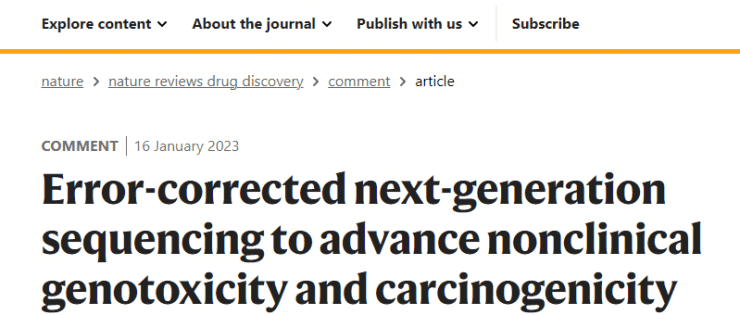
The HESI GTTC is pleased to share its newest publication, “Error-corrected next-generation sequencing to advance nonclinical genotoxicity and carcinogenicity testing,” published in Nature Reviews Drug Discovery. The commentary highlights the potential applications, advantages and challenges associated with implementing this emerging technology in nonclinical safety studies.
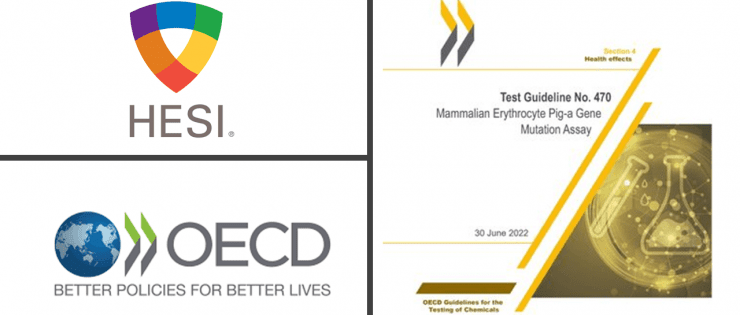
On 30 June 22, the Organisation for Economic Cooperation and Development (OECD) published Test #470: Mammalian Erythrocyte Pig-a Gene Mutation Assay, a Test Guideline (TG) that describes an in vivo gene mutation assay that can be combined with other genetic and general toxicology tests to promote the efficient use of animal resources. This TG is the culmination of fruitful discussions over more than a decade among HESI Genetic Toxicology Technical Committee (GTTC) Pig‐a Workgroup members who contributed directly to the Pig-a Assay Detailed Review Paper, the Pig-a Assay Retrospective Validation Report, the draft OECD TG, the OECD Expert Working Group, as wells as the recent GTTC best practices Review Paper.
The Health and Environmental Science Institute’s Genetic Toxicology Technical Committee (HESI GTTC) Education and Science Outreach Committee is pleased announce the 2024 awards that will provide opportunities for trainees to attend scientific conferences, workshops, or courses, etc., to build core competencies and transferrable skills, and/or share your research. Awardees will be invited to GTTC’s 2025 Annual Meeting to learn about the emerging projects and science at HESI and to network with experts in the gene toxicology field.
GTTC is pleased to announce TWO awards for 2024:
2023 Spring Awardees: Tony Okeke (Drexel University), Ammer Khawam (McGill University), Natalia Bertolez (University of Coruna), Sarah Park (Oak Ridge, US EPA), Victoria Bastos (Maastricht University), Alper Alcarez (NIEHS), Idoia Meaza Izusi (University of Louisville)
2022 Spring: Jonathan Axellson (UOttawa), Julie Sanders (Sciensano), Anouk Thienpont (VUB), Sam Vielee (U Louisville), David Schuster (UOttawa), Danila Cuomo (Texas A&M).
2022 Fall: Zhenming Yang (Rutgers), Lee Pribyl (MIT), Natalie Laspata (Pittsburg), Daniela Muoio (Pittsburg), Elizabeth Irvin (NC State), Rebekah Petroff (Michigan).
Established in 2022, the committee aims to increase awareness of genetic toxicology careers and provide training for the next generation of scientists through various networking activities and awards. The committee launched a new professional development award, aimed at providing opportunities to attend scientific conferences, workshop or trainings to build core competencies and transferable skills and/or to share their research. Awardees are invited to the GTTC’s annual meeting to learn more about HESI emerging projects and science and to network with experts in the genetic toxicology field. A new early career seminar series award will also be launched in 2023, among other to-be-determined activities.
HESI Staff:
Raechel Puglisi, MPH
This group is evaluating error-corrected next-generation sequencing (NGS) as an alternative methodology for evaluating in vivo mutagenesis. Over the past year, the group worked to qualify this platform in a second species and other mouse strains and began to work out the details on a technology transfer. Currently, the group is discussing the different workstreams/subgroups that would need to be established to move this project to the next phase, along with collaborations with both the eSTAR and CT-TRACs committees.
Leadership Team:
Bob Young, MS (MilliporeSigma)
Francesco Marchetti, PhD (Health Canada)
Sheroy Minocherhomji, PhD (Amgen)
HESI Staff:
Connie Chen, PhD, MPH
The work group has evaluated the current testing paradigm for genotoxicity assessment of nanomaterials and is publishing the findings and recommendations for modifying the tests as needed. They are currently considering publishing a series of protocols for genetic toxicity testing of products containing nanomaterials.
Leadership Team:
Rosalie Elespuru, PhD (US Food and Drug Administration)
Shareen Doak, PhD (Swansea University)
HESI Staff:
Connie Chen, PhD, MPH
Work for this group is centered around establishing/enhancing protocols for conducting genotoxicity assessment of effects to germ cells. After a series of publications in 2019, the group is finalizing a review on the impact of analyzing mutations in fast proliferating tissues at 28+28. This group is also considering future projects and the course of action for 2020–2021.
The United Nations subcommittee on the Globally Harmonized System of Classification and Labelling of Chemicals is examining whether or not to revise it’s definition of a germ cell mutation. Changes to the definition could impact the classification and labeling for many chemicals. HESI’s Genetic Toxicology Technical Committee Germ Cell Working Group is working to support their evaluation by re-visiting existing data regarding a substance’s molecular interaction with germ cell DNA. The working group will provide their opinion on what positive endpoints in somatic tissues and/or level of exposure in gonads would allow classification and labelling as a germ cell mutagen. The terms of reference and work program information can be found here: UN-SCEGHS-ToR GCM IGW
Leadership Team:
Jan van Benthem, PhD (National Institute for Public Health and the Environment, RIVM, The Netherlands)
Francesco Marchetti, PhD (Health Canada)
HESI Staff:
Connie Chen, PhD, MPH
Raechel Puglisi, MPH
The GTTC HCD Working Group is querying laboratories about their experiences with compiling, maintaining and using historical control data and distributions for genetic toxicology assay acceptance and evaluation. The compiled data will be used to determine where consensus approaches exist and, where possible, make recommendations on compiling, maintaining and monitoring historical control data and distributions.
Historical Control Distribution Working Group Survey
The GTTC HCD Working Group is querying laboratories about their experiences with compiling, maintaining and using historical control data and distributions for genetic toxicology assay acceptance and evaluation. The compiled data will be used to determine where consensus approaches exist and, where possible, make recommendations on compiling, maintaining and monitoring historical control data and distributions.
Completed surveys should be sent to Connie Chen (cchen@hesiglobal.org) by April 15, 2022.
Please download both the survey (excel-based survey) and the PDF instructions that you can use as a reference.
NOTE: If you have trouble editing the xls file survey please try two things: 1) Enable editing 2) Enable macros
Leadership Team:
Robert Smith (Labcorp)
Robert Heflich (US Food and Drug Administration)
HESI Staff:
Connie Chen, PhD, MPH
This newly established work group started this year with the following goals: (1) critically evaluate NAMs for in vitro genotoxicity testing, (2) envision how NAMs could expand current in vitro genetic toxicology testing strategies (e.g., developing a weight-of-evidence approach), and (3) make recommendations for creating an “in vitro only” approach for genetic toxicology testing that would meet the needs of various regulatory decision-makers.
Leadership Team:
Giel Hendriks, PhD (Toxys B.V.)
Stepahnie Smith-Roe, PhD (National Institute of Environmental Health Sciences, National Toxicology Program)
HESI Staff:
Connie Chen, PhD, MPH
This work group was formed in 2016. This working group focused on providing more detailed advice about which in vivo tests to choose to follow-up on in vitro positive results and how to conduct the tests. As a first step, the group compared data for 90 chemicals for the transgenic rodent assay, the in vivo comet assay, and cancer data. This work was published in Mutation Research/Genetic Toxicology and Environmental Mutagenesis in January 2019 in an article titled “A Comparison of Transgenic Rodent Mutation and In Vivo Comet Assay Responses for 91 Chemicals.” Two follow-up areas include (1) providing best practices on the in vivo comet assay and collecting data on substances that are positive (i.e., induce micronuclei [MN]) in vivo and (2) comparing the plasma concentrations at the lowest effective dose (LOED) with the lowest effective concentration (LOEC) for MN induction in vitro, which could shed some light as to whether there is any relationship between LOEC and LOED for MN-inducing compounds.
Leadership Team:
Dan Roberts, PhD (Charles River Laboratories)
David Lovell, PhD (St. George’s University of London)
Matt LeBaron, PhD (Dow Chemical Company)
The MGRA Working Group will develop a new mechanism-based risk assessment paradigm for genotoxicity, based on the Clean Sheet approach and using genotoxicity AOP’s including the ones developed by GTTC. Case studies will be used to demonstrate the usefulness of innovative, mechanism-based, testing approaches to the scientific and regulatory community in a real risk assessment context. A series of workshops will also be established to identify challenges and hurdles for acceptance of innovative methods, where successful examples will be discussed with relevant stakeholders.
Nitrosamines Subteam
This subteam has three goals: (1) to develop a protocol for an optimized Ames assay to predict the carcinogenicity of nitrosamines; (2) identify and verify in vitro assays with metabolically competent cells to support nitrosamines risk identification, and (3) develop a possible in vivo follow-up strategy to verify Ames data within the frame of ICH M7.
Leadership Team:
Tetyana Cheairs (NY Medical College), Andreas Czich (Sanofi)
Leadership Team:
Maik Schuler, PhD (Pfizer)
Stefan Pfuhler, PhD (Procter & Gamble Company)
HESI Staff:
Raechel Puglisi, MPH
The MOA Work Group established four subteams to develop tubulin binding, topoisomerase II inhibition, aurora kinase inhibition, and reactive oxygen species activation adverse outcome pathways (AOPs). These AOPs will be submitted to the OECD AOPWiki site, a public repository for approved AOPs. Once these four subteams complete their work, the goal will be to merge them with the Clean Sheet Work Group.
Leadership Team:
Mirjam Luitjen, PhD (National Institute for Public Health and the Environment, RIVM, The Netherlands)
Jan van Benthem, PhD (National Institute for Public Health and the Environment, RIVM, The Netherlands)
Stefan Pfuhler, PhD (Procter & Gamble Company)
HESI Staff:
Connie Chen, PhD, MPH
On 30 June 22, the Organisation for Economic Cooperation and Development (OECD) published Test #470: Mammalian Erythrocyte Pig-a Gene Mutation Assay, a Test Guideline (TG) that describes an in vivo gene mutation assay that can be combined with other genetic and general toxicology tests to promote the efficient use of animal resources. This TG is the culmination of fruitful discussions over more than a decade among the Pig‐a Workgroup members who contributed directly to the Pig-a Assay Detailed Review Paper, the Pig-a Assay Retrospective Validation Report, the draft OECD TG, the OECD Expert Working Group, as wells as the recent GTTC best practices Review Paper.
“Starting in the late 2000s, the HESI GTTC Pig-a Workgroup was instrumental in acting as a clearing house for discussing protocol changes that greatly improved the precision of the assay, discussing results from several international interlaboratory validation studies, and later in organizing an International Workshops on Genotoxicity Testing meeting on the assay in Foz do Iguacu, Brasil. The Workgroup also had a major role in developing the OECD Standard Project Submission Form (SPSF), that initialed the OECD TG project in 2015.” – Robert Heflich (US FDA), GTTC Pig-A working group co-chair
“HESI staff provided key logistical support that kept the OECD Test Guideline endeavor organized and focused. Also, the importance of HESI-GTTC members’ recommendations regarding study designs and scoring approaches cannot be overstated—they laid the foundation for this OECD approval.” – Stephen Dertinger (Litron Laboratories), GTTC Pig-A working group co-chair
Click to read the Terms of Reference and Work Program
With the publication of the OECD Test Guideline 470, this work group has completed its goal and has sunset.
Leadership Team:
Steven Dertinger, PhD (Litron Laboratories)
Bob Heflich, PhD (US Food and Drug Administration)
HESI Staff:
Connie Chen, PhD, MPH
The work group is evaluating chemical data and enhancing tools for genetic toxicology dose-response modeling. The group has a planned 2020 virtual EMGS workshop scheduled for December 2020. Additionally, the group is planning to present at the International Workshops on Genotoxicity Testing (IWGT) 2021 meeting and is working on publishing guidance for the standard use and regulatory acceptance of using the benchmark dose (BMD) approach with genetic toxicology data.
Leadership Team:
George Johnson, PhD (Swansea University)
Andreas Zeller, PhD (Roche)
HESI Staff:
Raechel Puglisi, MPH



Litron Laboratories

Swansea University
September 9, 2023 – September 13, 2023
Chicago, IL, USA
Several HESI programs will be featured throughout the meeting.
May 31, 2023 – June 1, 2023
Webcast, Washington DC
This workshop will engage invited stakeholders and key opinion leaders with expertise in the assessment of nitrosamines (NA), including Nitrosamine Drug Substance-related Impurities (NDSRI) detection and evaluation in order to achieve the following:
May 7, 2023 – May 9, 2023
GTTC, Annual Meeting
Save the Date! The GTTC will hold their Annual Meeting from May 7-9th, 2023.
April 30, 2023
GTTC Professional Development Award, Application due by 30 April 2023
Deadline to apply for the HESI GTTC Professional Development Award is 30 April 2023.
Mutation Research/Genetic Toxicology and Environmental Mutagenesis, 2022
It is often assumed that genotoxic substances will be detected more easily by using in vitro rather than in vivo genotoxicity tests since higher concentrations, more cytotoxicity and static exposures can be achieved. However, there is a paucity of data demonstrating whether genotoxic substances are detected at lower ...
Mutation Research / Genetic Toxicology and Environmental Mutagenesis, 2019
Whilst the TGR and comet assays are available for measuring genotoxic effects in multiple rodent tissues, there has been no systematic comparison of their performance in detecting genotoxicity per se. A working group of the Genetic Toxicology Technical Committee (GTTC), part of the Health and Environmental Sciences Institute ...
Mutation Research / Genetic Toxicology and Environmental Mutagenesis, 2019
The HESI Genetic Toxicology (GTTC) Committee Data Interpretation Workgroup initiated a project to collect and collate sets of data from established and experienced laboratories into a standardized database.
Mutation Research/Genetic Toxicology and Environmental Mutagenesis, 2017
The recent revisions of the Organisation for Economic Co-operation and Development (OECD) genetic toxicology test guidelines emphasize the importance of historical negative controls both for data quality and interpretation. The goal of a HESI Genetic Toxicology (GTTC) Committee workgroup was to collect data from ...
AOP Wiki, 2023
HESI GTTC is proud to report that AOP 296 “Oxidative DNA damage leading to chromosomal aberrations and mutations” is now available on the OECD i-Library!
Environmental and Molecular Mutagenesis, 2022
HESI Genetic Toxicology Technical Committee's first adverse outcome pathway (AOP) describing modes of actions leading to potentially heritable genomic damage is now online! This AOP focused on oxidative DNA damage and resulting mutations and chromosomal aberrations. It is currently included in the OECD workplan and is ...
hesi@hesiglobal.org
Phone: +1-202-659-8404
Fax: +1-202-659-3859
740 15th Street NW, Suite 600
Washington, DC 20005
Sign up for our monthly e-newsletter.